An automatic can make unfamiliar junctions, hotel entrances and parking manoeuvres feel more manageable. The best choice still depends on the people and bags travelling with you. Vrenty Car helps you assess automatic car rental in Side without treating every automatic as a family car or every larger model as more comfortable. Localrent handles the booking, and the rental company supplies the actual vehicle under its confirmed conditions.
Start with your driving comfort and planned journeys
If you normally drive an automatic, choosing the same transmission can remove an unnecessary adjustment on holiday. You will still need to learn the controls and understand the car's dimensions. If you normally drive a manual, an automatic may be appealing for frequent starts and stops, but allow time at collection to become familiar with selecting drive, reverse and park.
Think about where the car will spend its time. A couple making a local trip and returning to the same hotel has different needs from a family transferring between accommodation with every suitcase aboard. Choosing for the longest or most demanding journey is usually more useful than choosing for an idealised empty-car outing.
An automatic is not a substitute for a manageable schedule. Late arrival, unfamiliar roads and tired passengers can create more difficulty than the transmission itself. If arrival day already feels full, consider collecting at your hotel later. Our Side Rent a Car planning page helps you start with the rental period before narrowing the vehicle list.
Check the actual transmission field in the selected offer. Do not infer it from a vehicle photograph, model name or a broad category. If a replacement is proposed, transmission should be one of the first characteristics you reconfirm, alongside seats, luggage capacity and any equipment essential to your booking.
Measure the luggage problem with every seat occupied
Count the luggage you will have on collection day, not only the day bags you will carry sightseeing. Include large cases, cabin bags, a folded pushchair, mobility equipment and bulky beach items. A car described as seating five does not necessarily hold five people's holiday luggage comfortably at the same time.
Boot capacity figures can help, but their usefulness depends on shape. A narrow opening, high loading lip or sloping rear window may matter more than a nominal volume. Ask whether your largest item will fit and whether the luggage cover can remain in place. Avoid planning to stack bags where they obstruct the driver's view or occupy a needed seat.
For a hypothetical family with two children, two cases and a pushchair, a larger hatchback or estate-style layout may be more useful than a taller vehicle with an awkward boot. A seven-seater can lose much of its luggage room when the third row is used. These are reasons to check the actual layout rather than promises about a particular model.
If the car will be collected after an airport transfer, your suitcases may already be at the hotel. That can change the vehicle you need for subsequent days. However, check the return plan: choosing a smaller car for excursions will not work if you later expect it to carry the whole party and all luggage back to the airport.
| Requirement | What to inspect | Common mistaken shortcut |
|---|---|---|
| Pushchair and cases | Boot opening and space with seats upright | Choosing by seat count alone |
| Several child restraints | Rear-seat width and suitable installation | Assuming three rear seats fit three restraints |
| Seven passengers | Boot with third row in use | Treating seven seats as seven cases |
| Limited mobility | Door opening and seat access | Assuming a higher vehicle is easier |
Make child seats part of the booking decision
Request the type of child restraint appropriate to the child and ask what the supplier can provide. Availability should be confirmed for the selected dates. Do not assume a generic child-seat option means every size, attachment system or configuration is available. Clarify the charge and whether it is calculated per day or for the rental.
Ask who will install the seat and how you can check that the proposed arrangement suits the vehicle. At collection, allow enough time to inspect the restraint and understand its fitting instructions. Do not rush this step because the representative is waiting or the rest of the group wants to leave.
With more than one restraint, consider whether adults can still sit comfortably and whether access to the third row remains practical. A passenger may need to enter before a child seat is installed, which can become awkward during repeated stops. The most useful arrangement is one everyone can use safely throughout the trip.
Bring only equipment you know you can use with the booked vehicle, and confirm uncertain details before travelling. If a required seat is unavailable at handover, treat that as a problem to resolve before departure. An attractive rental rate does not compensate for an unsuitable passenger arrangement.

Compare compact, family and larger automatics
A compact automatic can be easier to position in constrained hotel parking and may suit two travellers with modest luggage. That does not establish fuel economy or equipment for every model. Read the actual offer and consider whether the boot will remain usable once your bags are loaded.
A family-sized car can provide more room for longer days and for loading children. Look beyond the exterior dimensions to door openings, rear legroom and storage. For a group that expects to spend time walking at Aspendos or Perge, a comfortable cabin for the return journey may matter more than a premium badge.
Larger vehicles bring practical costs of their own. They may need more space for turning or parking, and a driver unfamiliar with the corners of the car should practise carefully before entering a busy area. Parking sensors or cameras can help, but their availability and operation should be confirmed rather than assumed.
Choose an SUV or crossover because its verified space and seating suit you, not because an ordinary local itinerary supposedly requires off-road capability. The documented rental rules permit paved public roads only. A vehicle's appearance does not authorise beach access, rough tracks or entry to restricted visitor areas.
Check controls during a proper handover
Ask the representative to demonstrate gear selection, the parking brake, engine start and stop, lights, demisting and the fuel-door release. Different automatic systems can feel different at low speed. Understanding them while stationary is preferable to discovering an unfamiliar control at a junction.
Confirm how reverse is selected and how the car behaves when you release the brake. Familiarise yourself with the position of the pedals and use the control technique appropriate to the vehicle. Do not attempt to learn through hurried experimentation in a crowded hotel entrance.
Set the mirrors and driving position before departure. Pair navigation or arrange a safe phone position while parked, then enter your first destination. Ask about any warning light that remains illuminated. Check air conditioning under normal operation, especially when passengers will need it during longer daytime journeys.
If the vehicle has selectable driving modes or assistance features, ask which settings are appropriate for ordinary use and how to recognise when they are active. You do not need to master every menu during collection, but you should understand any feature that affects starting, stopping or reversing. Ask how to open the boot from inside and outside and where the basic emergency equipment is kept. These practical details matter when returning to a parked car with children or bags. Photograph a useful control explanation only while stationary, and keep the supplier contact available for a question you cannot resolve safely.
Inspect damage before bags hide parts of the interior. Record marks on seats, trim and the boot as well as the exterior. The insurance and damage guide explains why interior condition and excluded components deserve attention. An automatic transmission does not change the need for a complete condition record.
Arrange delivery where loading is realistic
Hotel collection can be helpful when offered, because passengers and bags are already together. It still needs a suitable meeting place. Ask whether a car can wait at the entrance, whether security must be informed and where you can install child seats without blocking traffic.
Use the full hotel name and address in Side, Kumkoy, Evrenseki or Colakli. Similar resort branding can obscure the actual property. A map pin and gate description help prevent a representative and a family from waiting at different entrances. Check the return arrangement separately rather than assuming reception will manage it.
The Side hotel car delivery guide covers these details. For a larger automatic, add any height restriction, narrow access or limited turning space reported by the hotel. The supplier can then discuss a practical alternative before the car arrives.
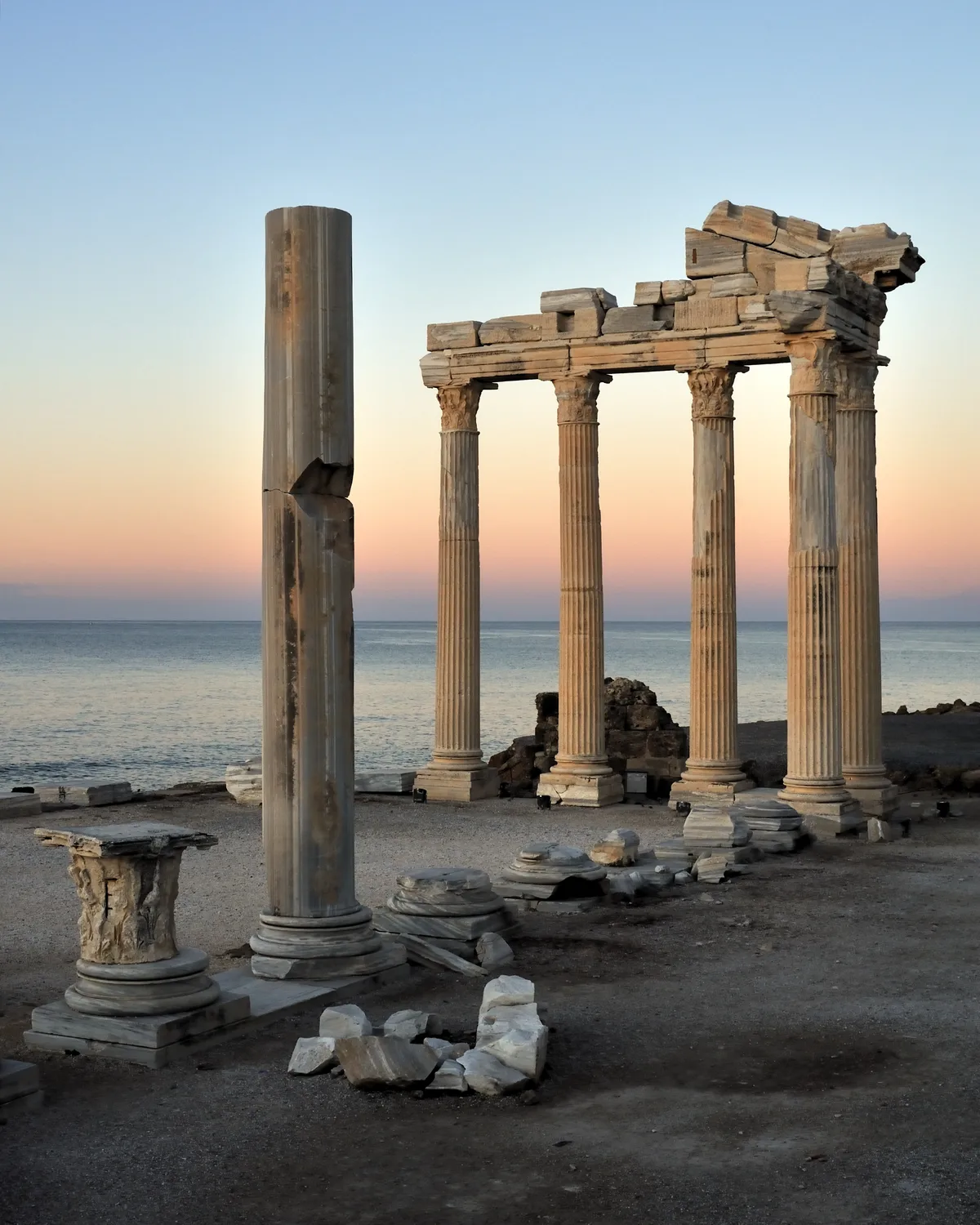
A hypothetical group staying near the historic peninsula might choose an accessible meeting point outside a restricted approach and walk there with only day bags. Another group with heavy luggage may prefer a different collection arrangement. Neither should assume permission to stop beside a monument or enter a pedestrian street just because a rental is being delivered.
Evaluate price, payment and the full rental conditions
Compare automatic offers for the same hours, location and equipment. A lower price may reflect a smaller vehicle, different protection or a collection point that takes longer to reach. Add selected child seats and an additional driver before deciding which total is best for the trip.
Security deposits, excess and accepted payment methods remain offer-specific. Do not assume an automatic category has one standard deposit or that a family car can be collected using any card. Check the driver's age and experience eligibility for the actual vehicle, and verify that the required physical documents and payment instrument will be available.
Mileage limits can matter when a local holiday expands into several regional outings. Calculate the planned routes from the actual hotel and include return journeys and detours. If an allowance is unclear, ask how it applies over the booking and what happens if it is exceeded.
Fuel policy also belongs in the comparison. Localrent's Turkey terms require the return fuel level to match collection, with no reimbursement for excess fuel. Record the starting level and plan the final refuelling stop. Vrenty Car recommends comparing the practical whole booking before paying for a vehicle upgrade that may not solve your actual needs.
Plan parking and the final day around the vehicle
The closer you drive to a busy destination, the more useful a backup parking plan becomes. Central Side can have limited parking during busy periods, and a large car does not make uncertain access easier. Use permitted parking and allow time to walk. Our Side parking guide explains how to check access without relying on invented schedules or fees.
Before reversing into a space, assess the room needed to open doors and remove a pushchair. A bay that accommodates the vehicle may still be impractical for passengers. If loading would put people in a traffic lane, choose a different space or reorganise the stop.
On return day, allow time to remove child seats if appropriate, check cabin pockets and unload the boot. Photograph the car and gauge before handing it back, and obtain the available return record. Notify the supplier in advance if the agreed time becomes unrealistic.
Vrenty Car treats vehicle choice as a comfort and logistics decision. The right automatic is the one that accommodates the actual passengers, works at your collection point and remains manageable for the person driving it. That conclusion comes from the offer and your itinerary, not from a universal preferred class.
Questions & answers
Does automatic always mean a larger car?
No. Transmission and size are separate characteristics. Confirm both in the offer, then check luggage space with the required seats in use.
Should I choose a seven-seater for a family?
Only if the seating arrangement and remaining luggage capacity fit your group. With the third row occupied, some layouts leave limited boot space. Ask about the actual car and your largest items.
Can I rely on a child seat being available at pickup?
Request it during booking and obtain confirmation of the suitable type. Check the seat and fitting arrangement before departure; an unconfirmed extra should not be treated as guaranteed.
Is an SUV needed for Manavgat or archaeological visits?
Ordinary visits using permitted paved public roads do not by themselves establish a need for an SUV. Choose for passengers, luggage and comfort, and avoid any approach that conflicts with the rental conditions.
What if the supplied car has a different transmission?
Raise the mismatch before accepting the vehicle. Use your confirmation to explain why automatic transmission is essential, and obtain a clear resolution through the supplier or booking platform.