Parking is part of choosing and using a rental car in Side, especially when visiting the historic peninsula. Vrenty Car helps you plan a permitted place to leave the vehicle, a sensible walk and a clear return deadline. Localrent notes that central Side and waterfront parking can be limited during busy periods. This guide does not claim verified municipal access hours, fixed fees or guaranteed spaces; check the signs and arrangements that apply when you arrive.
Separate the destination from the place you can drive
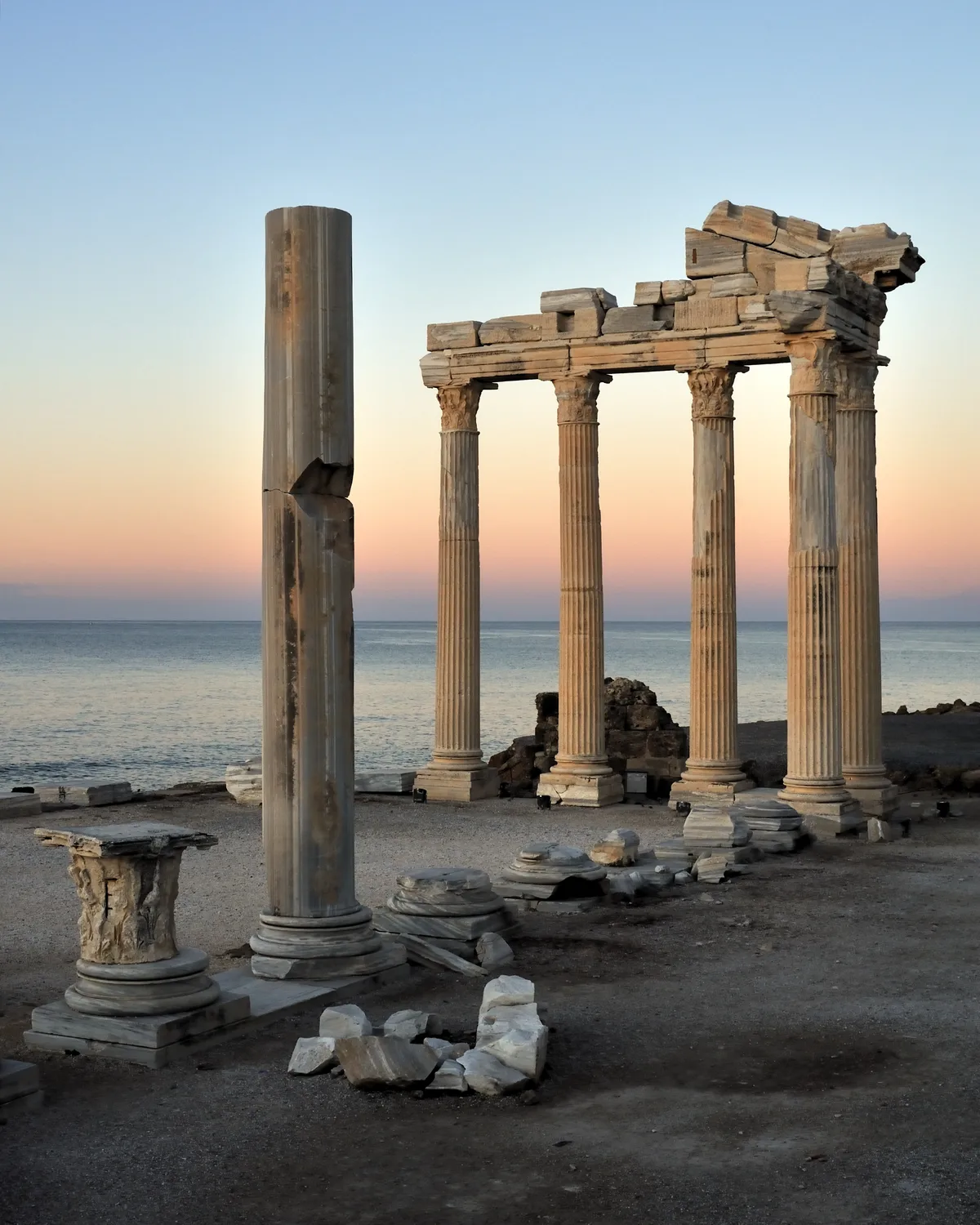
A navigation pin for a restaurant, temple or archaeological entrance describes where you want to go. It does not necessarily describe a legal vehicle approach or a parking entrance. This distinction is particularly useful in historic Side, which the Ministry of Culture and Tourism identifies as a narrow peninsula southwest of Manavgat.
Before starting, look for the permitted road approach and a signed parking option near enough for your group to walk. Keep an alternative in mind so that finding the first area full does not turn into repeated circulation through unfamiliar streets. A backup can also reduce pressure to stop somewhere unsuitable just because the passengers are impatient.
Treat barriers, pedestrian signs and instructions at the location as operational information to follow. This page does not establish an access exemption for rental cars, hotel guests or deliveries. If your accommodation is inside an area with uncertain vehicle access, ask it to explain the current guest approach and confirm the arrangement with the rental supplier.
For the wider rental decision, use the Side Rent a Car overview. A car can be valuable for regional journeys while still being unnecessary for the final part of a walk around old Side. Planning that transition makes the vehicle useful without expecting it to reach every destination door.
Read the conditions before leaving the vehicle
At a parking area, check the entrance signs, any bay markings and the payment instructions. Establish whether the charge depends on time, a session or another stated arrangement. Do not infer that parking is free from an open barrier, an unattended booth or the presence of other cars.
Check whether a time limit, closing arrangement or restriction affects your intended stay. If the information is unclear, ask the attendant or choose another permitted option. Rely on what you can verify at the location rather than a remembered fee from an old travel report.
Keep any ticket or receipt and note where payment is made. A photograph of the relevant sign can help you remember the conditions, but it does not override them. If an attendant asks for payment, make sure you understand what it covers and retain the available evidence of payment.
If payment depends on a machine or application, check the accepted method before committing to the stay. Do not assume the rental company's payment arrangements extend to a car park. Keep enough time to resolve an unclear ticket or exit procedure, especially before a rental return. When instructions cannot be understood confidently, a different permitted area with clear terms may be the more practical choice.
Choose a bay where the car fits within the markings and passengers can get out safely. Avoid blocking gates, access roads or other vehicles. A space that looks convenient for a photograph or a quick stop may not be suitable for parking, even if the destination is only a short walk away.
| Check | Useful evidence | Decision it supports |
|---|---|---|
| Vehicle access | Current signs and a permitted approach | Whether to continue or turn back |
| Parking charge | Posted terms or a clear operator explanation | Whether the stay fits your budget |
| Time restriction | Displayed limit or closing information | When to return to the car |
| Walking route | Safe path and realistic distance for your group | Whether this parking area is suitable |
Build walking time into a Side visit
The useful measure is not only the distance from the car to the attraction. Include unloading, finding the pedestrian route, reaching the destination and returning afterwards. Children, pushchairs, heat and mobility needs can change what counts as a comfortable walk. Avoid assuming every member of the group moves at the driver's pace.
Save the parking location before leaving and note a landmark or entrance name. Large or unfamiliar parking areas can be harder to recognise from the opposite direction. A location pin is helpful, but a short written note can be useful if the phone signal or battery becomes unreliable.
Take the items needed for the visit and keep valuables with you where practical. Do not rely on a luggage cover as proof that stored belongings are protected by the rental insurance. The vehicle agreement and any separate personal-belongings cover are different matters.
A hypothetical couple may be happy to park farther away and walk, while a family with a pushchair might prefer a closer permitted area even if it costs more. The sensible choice is the one that works for the actual passengers and leaves enough time for the rest of the rental day.

Ask the hotel about overnight parking before booking
Hotel parking can decide whether keeping a car for the whole holiday is convenient. Ask whether guests may park overnight, whether there is a charge, whether places are guaranteed and how to enter after an evening outing. Confirm any height or size restriction relevant to the vehicle you are considering.
Do not assume that hotel delivery includes parking for the rest of the stay. The supplier may be able to meet at the property even when the hotel cannot offer an overnight space. Conversely, a hotel may provide guest parking but have no suitable location for a long inspection at its entrance.
Give the actual property address in Side, Kumkoy, Evrenseki or Colakli when discussing delivery. The hotel delivery guide explains how to agree a gate, meeting pin and loading area. This is especially useful when coach arrivals use the same entrance.
If parking is limited, compare a shorter rental period covering consecutive excursion days. Paying a lower daily rate for more days may bring little benefit when the car stays parked. Keep delivery charges and collection convenience in the comparison so that the apparent saving does not disappear elsewhere.
Choose a vehicle you can place confidently
A compact vehicle can be easier to manoeuvre in constrained spaces, but it must still accommodate your passengers and luggage. Do not choose a car that is too small solely because it looks easier to park. Equally, avoid upgrading to a large vehicle without a practical reason when most journeys involve two people and light bags.
Ask whether the actual vehicle has parking aids if they matter to you, and test their operation during collection. Cameras and sensors are assistance, not a substitute for checking the space and surroundings. Dirt, angles and objects close to the vehicle can affect what you notice.
Allow room to open rear doors for child seats or remove a pushchair. If a bay technically fits the car but makes passenger access unsafe, choose another. Discuss difficult manoeuvres calmly and stop if you cannot clearly see the space rather than continuing under pressure from another driver.
The automatic car and family space guide connects vehicle size with transmission, luggage and seating. Vrenty Car recommends choosing a manageable car for the whole trip, then planning parking around its real dimensions instead of expecting a vehicle class label to solve the problem.
Protect the condition record at each end of the rental
Before leaving the collection point, photograph the car's exterior, wheels, glass and interior, and make sure existing marks are recorded. Parking damage can be difficult to discuss later when there is no clear starting record. Good photographs are useful even when you have selected additional protection.
If you discover new damage while parked, contact the supplier promptly using the verified rental contact and follow the incident procedure. Do not assume a small scrape can be ignored or repaired privately. Ask what documentation is needed and preserve the scene evidence where it is safe to do so.
Localrent's standard Turkey conditions exclude several components, including wheels, underbody, windscreen and interior. A kerb-related wheel issue therefore deserves attention when reviewing protection. The Side insurance guide explains why excess, exclusions and reporting rules should be read together.
If the vehicle may be unsafe, do not drive it simply to avoid disrupting the day. Describe the problem and location clearly to the rental company. Vrenty Car is an information website, not a roadside recovery provider; the supplier's procedure and verified contacts are the relevant starting point for a rental-vehicle issue.
Keep day-trip parking within the permitted route
At Manavgat Waterfall, Aspendos or Perge, use the current visitor approach and signed parking arrangement. The research identifies the destinations but does not establish present parking fees, capacity or opening times. Check current visitor information before setting out, then follow the signs at the site.
Do not mistake an attraction's administrative address for the visitor car park. This is especially relevant when an official page lists a municipal contact rather than an entrance pin. Verify the actual approach in navigation and, where needed, with the destination.
Keep the rental on paved public roads under the documented conditions. A rough shortcut to a riverbank or an informal area used by other vehicles is not automatically permitted. If the final approach conflicts with the agreement, find a suitable paved alternative or change the stop.
The Manavgat Waterfall driving guide helps compare a local car outing with public transport. A car's flexibility is most useful when it connects several planned stops; it does not remove the need to park and continue on foot at the destination.
Distinguish airport passenger drop-off from rental return
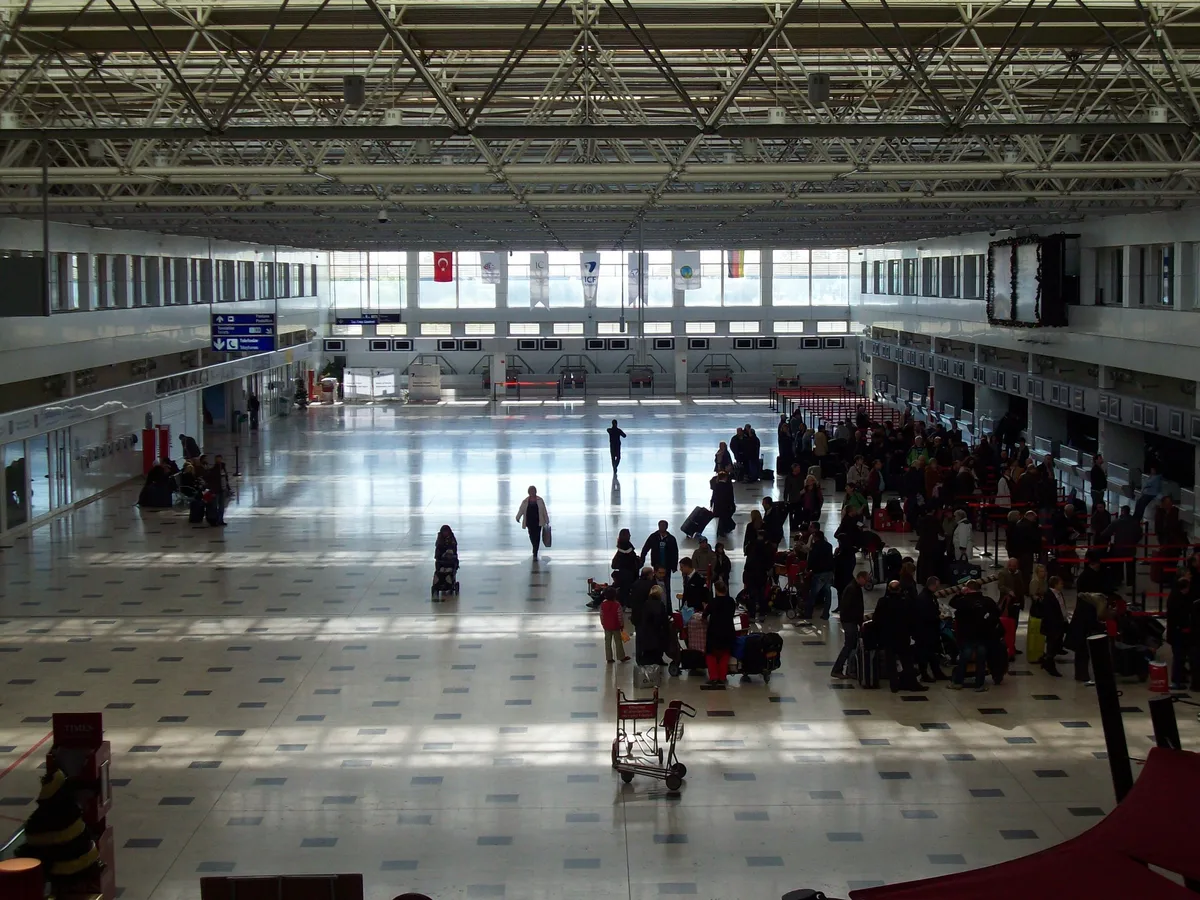
If your rental ends at Antalya Airport, obtain the supplier's exact return pin and terminal instructions. The airport has separate terminal buildings, so a generic airport destination is insufficient. Confirm where inspection, payment questions and key handover will happen.
The airport's departing-passenger guidance gives a short stopping limit in departure drop-off areas and requires the driver to stay with the vehicle. That makes these lanes unsuitable for assuming you can conduct a leisurely rental inspection. Follow the supplier's confirmed return arrangement in an appropriate location.
Ask who pays any parking charge associated with collection or return. The airport publishes parking information and a fee calculator, but this does not prove parking is included in your rental service. Keep the agreed answer with the voucher.
Allow separate time for refuelling, finding the return point, unloading and reaching the terminal. A navigation arrival estimate does not include these tasks or airline check-in. If you need to accompany passengers inside, use the airport's parking arrangements rather than leaving the car in a short-stop lane.
Use a simple parking decision before every stop
Ask three practical questions: may I drive here, may I leave the car here, and can everyone reach the destination from here? If one answer is uncertain, resolve it before turning off the engine. This approach works for hotel entrances, old-town visits and regional attractions without requiring a memorised list of unverified local rules.
Before walking away, check the return deadline against the parking conditions and rental agreement. Save the car's location, keep the ticket and take the supplier contact with you. Set yourself a comfortable time to begin walking back instead of treating the rental deadline as the time to leave the attraction.
A hypothetical driver planning a final Side visit before returning the car might choose a shorter walk and a simpler exit route. Another driver with the whole afternoon free can accept a more distant space. The value of a parking option depends on the next stage of your journey, not only its price.
Questions & answers
Can I drive anywhere in Side's old town?
Do not assume unrestricted access. Follow current signs, barriers and local instructions, and ask your hotel about a permitted approach. This guide does not claim a verified municipal access schedule.
Is parking in Side free?
There is no universal answer. Check the conditions at the specific parking area and retain any payment receipt. An open space or an unattended booth does not establish free parking.
Should I rent a smaller car just for parking?
Choose the smallest vehicle that comfortably meets your passengers, luggage and driving needs. A car that cannot carry your group is not a useful saving, even if it is easier to manoeuvre.
What should I do if I find damage after parking?
Notify the rental supplier promptly and follow its reporting instructions. Preserve useful evidence and do not arrange an unapproved repair or continue driving an unsafe vehicle.
Can I leave the rental in an airport drop-off lane?
Use the return procedure and location confirmed by the supplier. Passenger drop-off lanes have their own short-stop conditions and should not be assumed to be rental return areas.
Continue planning
Sources
- Localrent: Side booking and collection guidance
- Localrent: Turkey rental and booking conditions
- Ministry of Culture and Tourism: Side ancient city
- Antalya Airport: parking information
- Antalya Airport: departing passenger guidance
- Antalya Airport: road access and terminals
- Ministry of Culture and Tourism: Manavgat Waterfall
- Go Turkiye: Antalya regional sights